

Why should I support an athlete just because we share a flag?
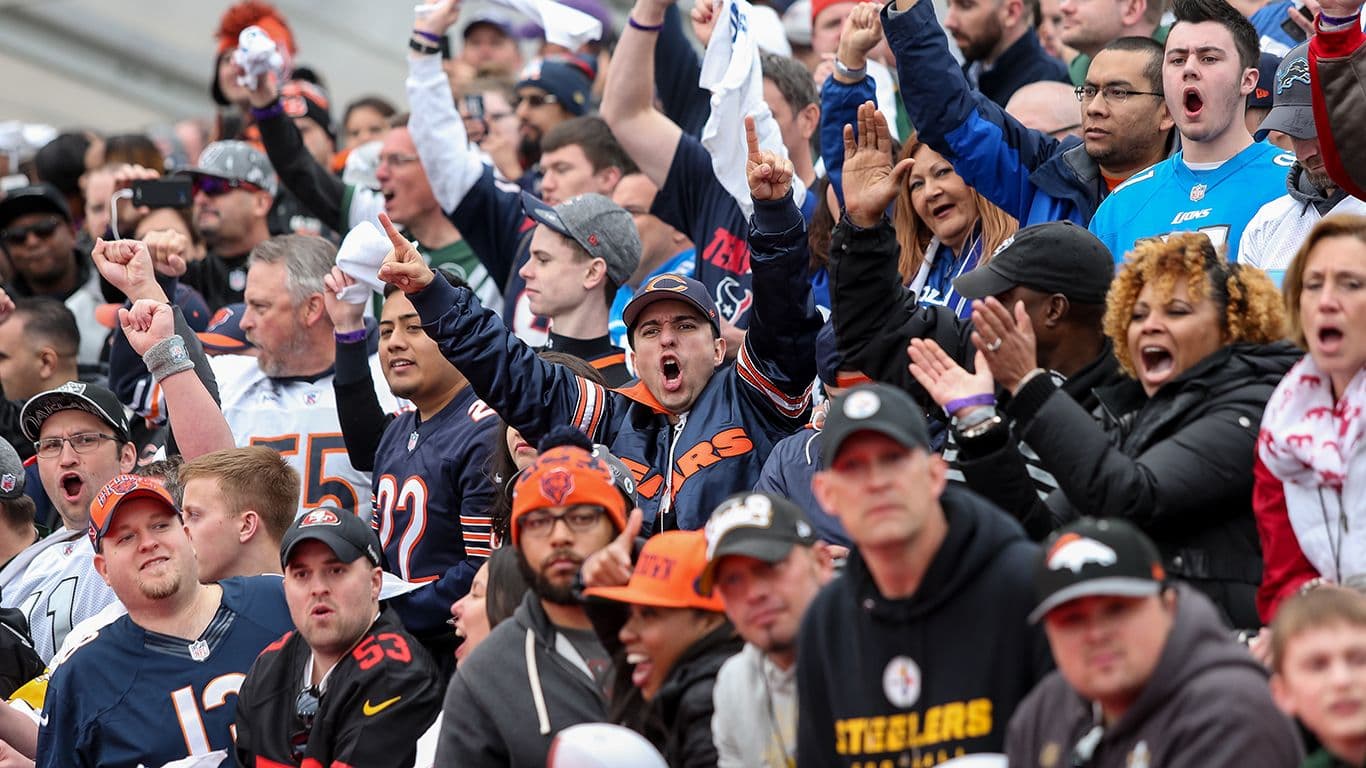
Why should I root for an athlete simply because they come from the same country as I do? Is a shared language—or the accident of being born within the same borders—really enough reason to support someone? And does this reflex not lead us back into the darkness of the past, when people were divided into us and them before anyone bothered to ask who those people actually were?
Imagine that an athlete from my country is competing against someone from abroad. I know neither of them. Yet I am expected to support the first and hope that the second one loses.
Why?
Perhaps, if I knew them personally, I would discover that I had nothing in common with my compatriot. Perhaps we would have nothing to talk about. Our values might differ so profoundly that I would not even want this person in my life.
And perhaps the foreign opponent would turn out to be fascinating. We might become friends. I might admire their intelligence, sensitivity, humour or courage. I might even fall in love with them.
But none of this matters when the flags appear. One athlete is automatically “ours,” the other “theirs.” Biography, personality and values disappear. A coloured piece of fabric decides where our sympathies should go.
Is this really a thoughtful response—or merely an atavistic one?
Supporting “our side” may be one of the simplest tribal impulses we possess. It requires no knowledge of the people involved and no moral or intellectual judgement. We recognise a familiar symbol, hear a familiar language and react. Our tribe is competing, so our tribe must win.
At that moment, are we using the part of the brain we are so proud of—or simply repeating the behaviour of animals defending their group against outsiders?
We often say that the human brain is our greatest asset. It allows us to question instincts, examine assumptions and see individuals where others see only categories. Yet in sport, we frequently switch it off with remarkable enthusiasm. A flag appears on the screen, and millions of supposedly rational adults begin celebrating a stranger whom they might dislike intensely if they ever met.
Modern national identity is also far less ancient than it feels. Nations are often presented as timeless communities, but modern nationalism largely developed during the last two or three centuries. It helped organise societies, but it also became an extraordinarily effective instrument of political mobilisation. If people could be persuaded that millions of strangers were their brothers and sisters, they could also be persuaded to fight, kill and die for them.
“Your country needs you” sounds much more inspiring than “someone in power needs your body.”
Does national sport rehearse the same division in a safer form? Perhaps partly. Flags, anthems, uniforms, heroic language and collective triumph all turn competition between individuals into symbolic conflict between nations. Sport can give tribal emotions a relatively harmless outlet—but it can also strengthen the habit of seeing the world as a permanent contest between us and them.
Hopefully, sport is much more than preparation for conflict. It can display extraordinary discipline, courage, intelligence, creativity and physical skill. It can connect people across borders and produce moments of genuine admiration for someone whose language we do not understand.
But to experience that, perhaps we need to stop treating every competition as a miniature war.
Why can we not simply watch sport and appreciate the brilliance of both sides? Why must we choose someone to support with an intensity that makes the opponent’s failure almost as satisfying as our favourite’s success?
People often say that watching without taking sides is impossible—that without emotional allegiance, sport loses its meaning.
I do not believe that.
Imagine that you have two children and they are playing against each other. Do you passionately support one and hope that the other fails? Do you scream with joy when one makes a mistake? Or do you watch both of them with interest, enjoy their effort and skill, and feel proud regardless of who wins?
You may naturally sympathise with one at a particular moment. That is human. But you do not need to turn the other into an enemy to care about the contest.
Perhaps we could watch professional athletes in the same way—not as extensions of flags, governments or national myths, but as individual human beings displaying what our species can do.
They are not “ours” or “theirs.” They are people. Some may be generous, thoughtful and admirable. Others may be unpleasant, selfish or simply uninteresting. We usually do not know. Nationality tells us almost nothing about their character and gives us no rational basis for deciding who deserves our sympathy.
So perhaps we should stop pretending that it does.
Let us enjoy the contest as we might enjoy a game between our own children: interested in the struggle, impressed by excellence and moved by effort, but without needing hatred, humiliation or tribal hostility to make the experience meaningful.
Watch the athletes. Admire their skill. Appreciate the drama. Celebrate the beauty of the competition.
And allow the better performance to win—even if it speaks another language.