

Is the coronavirus hastening the posthuman era?
Is the Coronavirus Hastening the Posthuman Era?
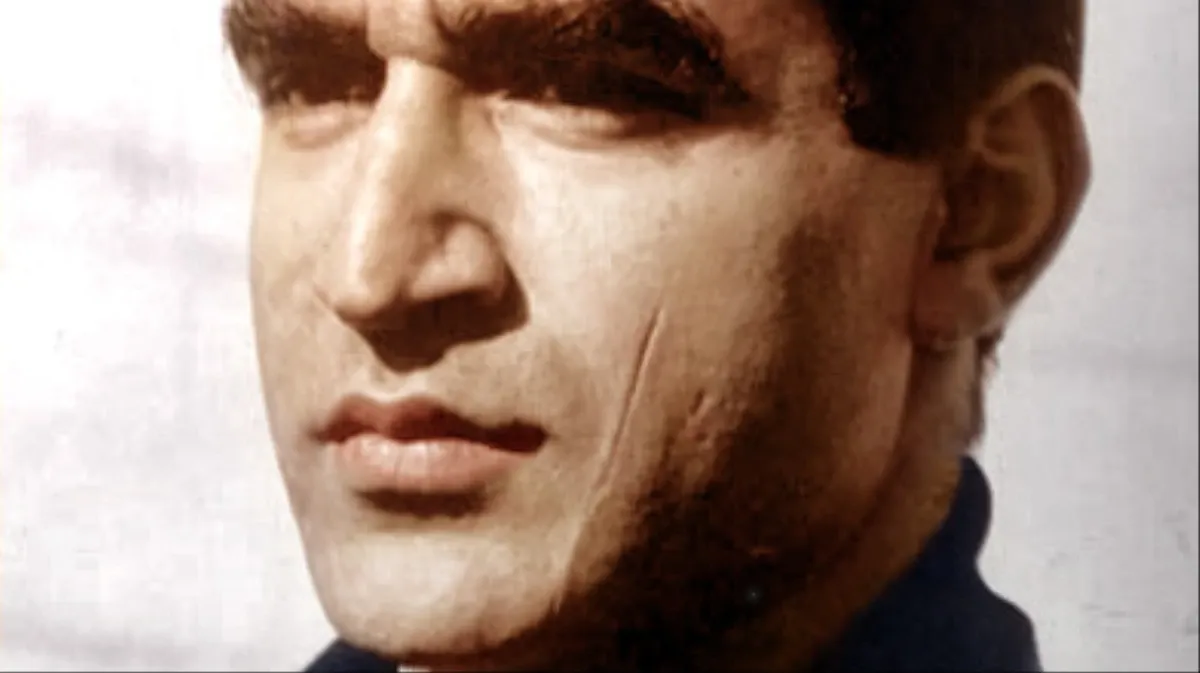
Fereidoun M. Esfandiary was an Iranian-American futurist, writer and lecturer born in Belgium. The son of an Iranian diplomat, he had lived in 17 countries by the age of eleven, represented Iran in basketball at the 1948 Olympic Games and later taught courses on the future at the New School and UCLA. He wrote about the decline of national identities, technological progress and humanity’s eventual victory over ageing and death.
In the 1970s, he began using the name FM-2030 and formally adopted it in 1988. The name expressed his rejection of identities determined by ancestry, nationality or religion, as well as his belief that the years around 2030 would bring radical advances in human longevity. He expected to celebrate his hundredth birthday that year.
He died of pancreatic cancer in 2000, at the age of 69. In accordance with his vision of the future, his body was cryopreserved in the hope that medicine might one day make his revival possible.
FM-2030 became one of the early advocates of transhumanism: the belief that science and technology can help us overcome ageing, disease and perhaps even death. From this perspective, the human body is not the final product of evolution but a temporary version—one that can be repaired, modified and improved.
The coronavirus pandemic may have brought this future closer. COVID-19 has shown us how fragile our bodies are while moving a significant part of our work, education, relationships and services into the digital world. These technologies already existed, but within a few months they became part of everyday life for millions of people.
We have not yet entered the posthuman era. At the end of 2022, the pandemic is still with us, and we continue to become ill, grow old and die. The crisis has shown, however, how quickly we turn to technology when confronted with the limitations of biology.
The boundary between the physical and digital person is becoming less distinct. Our bodies are increasingly observed, measured and supported by technology, while significant parts of our identity and social existence now function independently of physical location.
FM-2030 imagined a future in which human beings would no longer be defined by birthplace, nationality, gender or biological inheritance. The pandemic did not create that world, but it may have moved us one step closer to it.
The posthuman era may not arrive with a spectacular invention or a clear announcement. It may emerge gradually, through thousands of practical decisions made during moments of fear and necessity.
Perhaps the coronavirus did not open the door to that future.
Perhaps it merely pushed us through a door that was already open.
Sources: